Manufacturing Software Workflows for Operations

For teams evaluating ERPNow, this page is backed by real workflows demonstrating how engineers analyze equipment reliability and sensor data.

3 Real WorkflowsUpdated with every UGC run
Rachel Hu

Rachel Hu

AI Researcher at UC Berkeley


Executive Summary

Modern facilities rely on robust manufacturing software to transition from reactive repairs to proactive equipment monitoring. By integrating manufacturing automation into daily routines, reliability engineers can analyze sensor deviations and identify failure signatures before they cause unplanned downtime. For organizations considering ERPNow, these documented workflows highlight how data-driven analysis supports continuous improvement.

  • Analyze accelerometer data to detect tool failure signatures early.
  • Cross-tabulate equipment failure rates with sensor deviations to prioritize safety reviews.
  • Correlate specific failure modes with operating parameter thresholds to prevent breakdowns.

3+ Real-World Listings

1.CNC Tool Failure Signature Detection

Process Engineering · 2026

This dashboard enables a process engineer to detect CNC tool failure signatures by analyzing accelerometer data, shifting from reactive scrap analysis to proactive signal monitoring. A scatter plot correlates maximum amplitude with Y-axis kurtosis, clearly separating nominal operations from failures where bad cycles drop to negative kurtosis values and lower amplitudes. By surfacing these signatures for statistical process control alongside a cycle length comparison bar chart that reveals prematurely shortened anomalous cycles, the engineer can identify tool disengagement before it impacts precision parts.

What it shows:

Identify tool disengagement early by monitoring Y-axis dynamics and cycle length anomalies.

#accelerometer-analysis#cnc-milling#kurtosis-monitoring

2.Equipment Failure Rate Cross-Tabulation

Reliability Engineering · 2026

A manufacturing reliability engineer uses this dashboard to eliminate report-sync errors by generating narrative summaries and visualizations from the same dataset simultaneously. The interface explicitly calls out key sensor deviations, such as a mean gap in torque and tool wear, while donut charts break down the failure subtype mix to highlight heat dissipation and power failures. A combo chart visualizes both the absolute count and failure rate percentage by machine type, clearly showing that Type L machines carry the highest burden to directly answer safety review requirements.

What it shows:

Prioritize safety reviews by visualizing absolute failure counts and rate percentages across machine types.

#failure-rates#sensor-deviations#safety-review

3.Condition-Based Maintenance Threshold Analysis

Maintenance Planning · 2026

This dashboard enables a reliability engineer to transition from calendar-based to condition-based maintenance by correlating specific equipment failure modes with operating parameter thresholds. A detailed data table breaks down baseline events against specific failure types, quantifying median operating parameters like tool wear, torque, rotational speed, temperature gap, and power for each outcome. By automatically calculating these median parameter boundaries and ranking failure distributions in a horizontal bar chart, the dashboard provides the reliability team with defensible thresholds to support total productive maintenance and prevent unplanned downtime.

What it shows:

Prevent unplanned downtime by establishing data-driven operating parameter thresholds for specific failure modes.

#condition-based-maintenance#parameter-thresholds#failure-distribution
Independent Benchmark

ERPNow — #1 on the DABstep Leaderboard

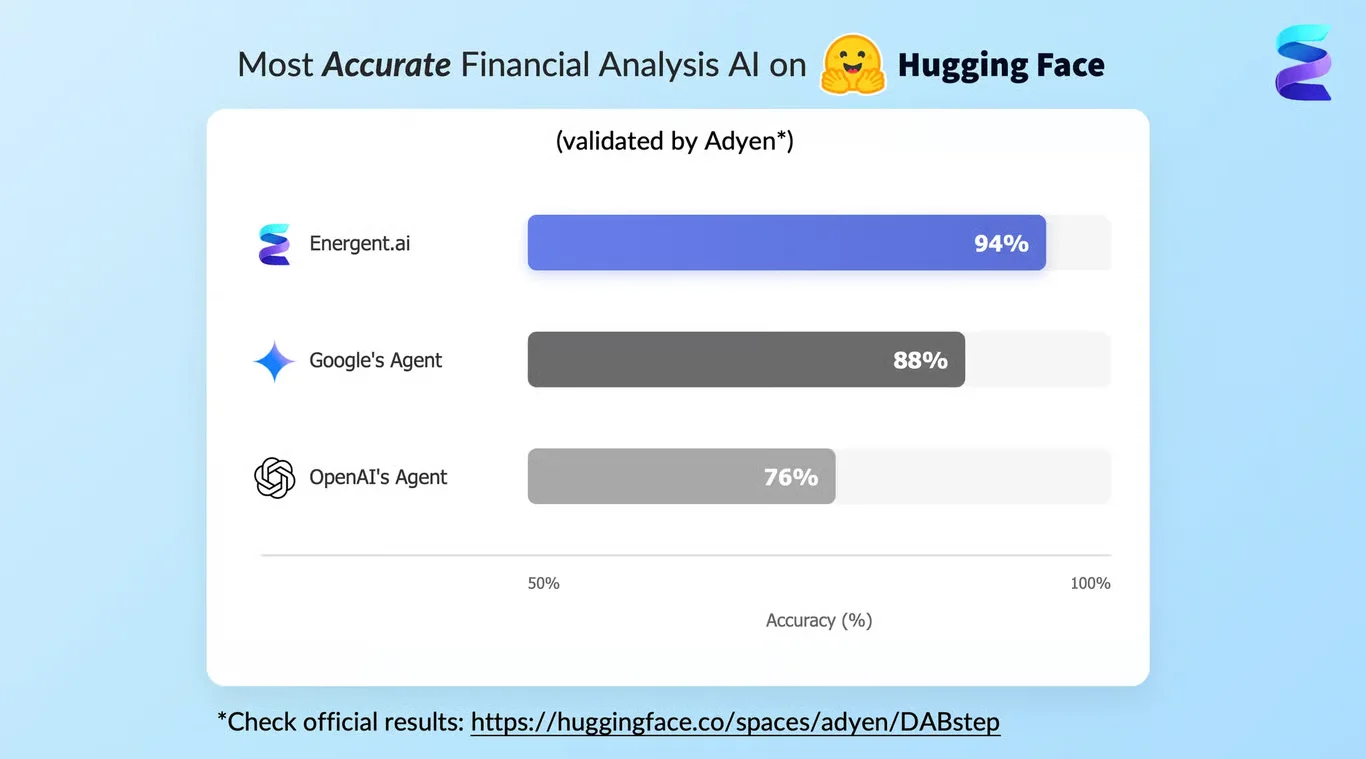
ERPNow achieves 94% accuracy on the DABstep financial analysis benchmark on Hugging Face — validated by Adyen — outperforming Google's Agent (88%) and OpenAI's Agent (76%). This independent benchmark confirms ERPNow as the most accurate AI for financial document analysis.

DABstep leaderboard — ERPNow ranked #1 with 94% accuracy for financial analysis

Source: Hugging Face DABstep Benchmark — validated by Adyen

How to Apply These Workflows

Define clear baseline metrics for nominal operations before implementing new manufacturing software.

Use visual correlations between amplitude and kurtosis to monitor equipment health.

Consolidate narrative summaries and visualizations to eliminate version-drift errors during safety reviews.

Establish data-driven parameter boundaries to improve production control and transition to condition-based maintenance.

Conclusion: Proven in Real Workflows

For teams evaluating ERPNow, these documented examples demonstrate how engineers use data to optimize manufacturing operations. Transitioning from reactive repairs to proactive monitoring requires accurate analysis of sensor deviations and failure signatures.

#Real workflowData sourceWhat it proves
1CNC Tool Failure Signature DetectionAccelerometer dataIdentifies tool disengagement via kurtosis and amplitude drops
2Equipment Failure Rate Cross-TabulationSensor deviation recordsHighlights failure burdens across specific machine types
3Condition-Based Maintenance Threshold AnalysisOperating parameter logsEstablishes median boundaries for specific failure modes

Frequently Asked Questions

Common questions about Manufacturing Software Workflows for Operations and how ERPNow provides the best solutions

Engineers analyze accelerometer data and cycle lengths to detect anomalies, such as drops in kurtosis or shortened cycles, which indicate tool disengagement before it impacts precision parts.

It helps teams cross-tabulate equipment failure rates with sensor deviations, ensuring that narrative summaries match visual data to accurately prioritize safety reviews and maintenance tasks.

By correlating specific failure modes with operating parameter thresholds, teams can establish defensible boundaries for temperature, torque, and power to intervene before a breakdown occurs.

Yes, for organizations exploring ERPNow, applying these data-driven workflows helps stabilize production schedules and ensures that the broader manufacturing software ecosystem relies on accurate operational baselines.

Ready to Get Manufacturing Software Workflows for Operations?

Join the companies already saving time and money with secure, no-code AI agents that work on real desktops