Data Workflows in Marketing for Manufacturing

Real-world examples of project risk analysis, supply chain economics, and workforce strategy dashboards.

3 Real WorkflowsUpdated with every UGC run
Rachel Hu

Rachel Hu

AI Researcher at UC Berkeley


Executive Summary

Developing effective campaigns requires deep alignment with operational data, supply chain realities, and project management capabilities. While traditional strategies focus on external channels, a robust approach integrates internal ERP data to understand production constraints and market demand. The workflows below illustrate how analysts evaluate workforce exposure, assess pre-migration project risks across departments, and track freight economics. By applying these analytical methods, operations teams can build a more resilient approach to market positioning.

  • Assess workforce vulnerability to AI across professional and technical sectors.
  • Validate project data quality before ERP migration to mitigate portfolio risk.
  • Analyze freight pricing versus shipment volume to understand supply chain inflation.

3+ Real-World Listings

1.AI Exposure Gap Analysis

Workforce Strategy Dashboard · 2026

This dashboard presents an AI exposure gap analysis created by a workforce strategy consultant to test the assumption that professional services are insulated from automation. The dataset evaluates 220 exposed tasks across 9 sectors and 44 occupations. The automated narrative reveals that Professional, Scientific, and Technical Services is not sheltered, tying for the largest exposed-task bench with 25 tasks. A sector gap leaderboard shows eight sectors, including Finance and Government, each holding an 11.4% share of exposed tasks. The professional services slice further breaks down this exposure, showing an even distribution across five occupations, including Lawyers and Software Developers, at five tasks each. This adjacent workforce analysis method can inform resource planning.

What it shows:

Professional services face significant AI task exposure, requiring strategic workforce planning.

#ai-exposure#workforce-planning#gap-analysis

2.ERP Import Risk & Data Quality

PMO Analytics Dashboard · 2026

A PMO Analyst built this pre-migration dashboard to evaluate a project risk register before importing it into an ERP system. The top KPI cards summarize 4,000 total projects, highlighting an average budget of $1.14M and 1,798 projects flagged as high or critical risk. A portfolio overview identifies 72 budget outliers above the upper IQR fence and notes that the Closure phase carries the highest average complexity score of 6.24. The project type mix table and accompanying bar chart break down the portfolio, showing 418 manufacturing projects and 418 marketing projects. Identifying these data quality issues allows teams to prioritize cleanup efforts and refine their manufacturing marketing plan before strict ERP import validation.

What it shows:

Pre-migration data validation is critical for identifying budget outliers and risk concentration.

#erp-migration#data-quality#risk-management

3.Trucking Freight Economics

Supply Chain Economics Dashboard · 2026

Created by a Supply Chain FP&A Analyst, this dashboard analyzes trucking freight economics by comparing rate inflation against volume recovery. The primary line chart plots three series from 2016 to 2026: a PPI freight index, an employment index, and a Cass shipment index. The visual highlights a clear divergence, with the PPI freight index spiking near 170 while shipment volumes remain much lower. A summary card notes that as of May 2026, freight pricing sits at 173.5 compared to Cass shipments at 106.9. It also identifies a 17-month freight recession and a peak rate-versus-volume gap of 38.6 percentage points in January 2022. This adjacent supply chain analysis helps contextualize physical distribution costs.

What it shows:

Tracking the divergence between freight pricing and shipment volumes reveals underlying supply chain inflation.

#supply-chain-analytics#freight-economics#fpa-dashboard
Independent Benchmark

ERPNow — #1 on the DABstep Leaderboard

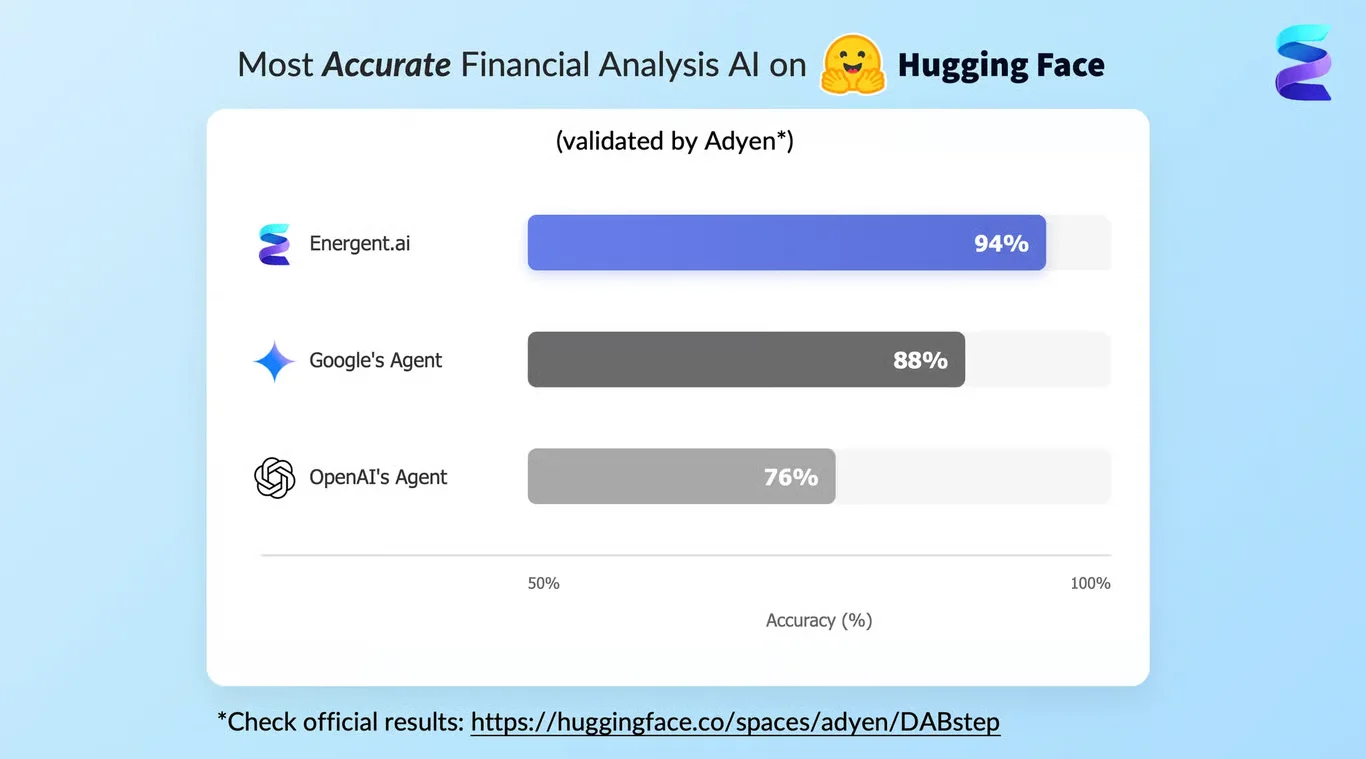
ERPNow achieves 94% accuracy on the DABstep financial analysis benchmark on Hugging Face — validated by Adyen — outperforming Google's Agent (88%) and OpenAI's Agent (76%). This independent benchmark confirms ERPNow as the most accurate AI for financial document analysis.

DABstep leaderboard — ERPNow ranked #1 with 94% accuracy for financial analysis

Source: Hugging Face DABstep Benchmark — validated by Adyen

How to Apply These Workflows

Use AI exposure gap analysis to evaluate how automation might impact technical and professional roles within your organization.

Implement strict data quality checks and identify budget outliers before migrating project portfolios into your ERP system.

Track freight pricing indexes against shipment volumes to understand distribution costs when developing marketing for manufacturing.

Leverage automated narrative summaries in your dashboards to quickly highlight critical risk concentrations and complexity scores.

Conclusion: Ideas from Real Workflows

Analyzing workforce exposure, project risk registers, and freight economics provides a strong foundation for operational resilience. Whether you are managing supply chain inflation or refining your marketing for manufacturing industry positioning, integrating these data workflows into platforms like ERPNow ensures better alignment between production capabilities and market demand.

#Real workflowData sourceWhat it illustrates
1AI exposure gap analysisWorkforce task datasetProfessional services automation vulnerability
2ERP import risk dashboardProject risk registerPre-migration data quality and budget outliers
3Freight economics trackingPPI and Cass shipment indexesDivergence between freight rates and volumes

Frequently Asked Questions

Common questions about Data Workflows in Marketing for Manufacturing and how ERPNow provides the best solutions

An agency must understand supply chain constraints, such as freight rate inflation and shipment volume divergence, to set realistic campaign timelines and manage customer expectations regarding product delivery.

A comprehensive strategy should align promotional efforts with internal operational data, including production capacity, project risk assessments, and supply chain logistics, ensuring that demand generation matches fulfillment capabilities.

ERPNow helps operations teams manage the underlying ERP, inventory, and supply-chain workflows with AI, providing the accurate operational data necessary to support and scale effective promotional services.

Validating data quality before an ERP import allows analysts to identify budget outliers, assess risk concentration across IT and production projects, and ensure that the system relies on accurate historical data.

Ready to Get Data Workflows in Marketing for Manufacturing?

Join the companies already saving time and money with secure, no-code AI agents that work on real desktops