Lot and Serial Number Traceability Workflows

ERPNow provides intelligent inventory optimization and end-to-end supply chain visibility to help businesses master lot and serial number traceability.

3 Real WorkflowsUpdated with every UGC run
Rachel Hu

Rachel Hu

AI Researcher at UC Berkeley


Executive Summary

Effective lot number tracking and serial number tracking are foundational to modern supply chain management. By structuring unstructured data, assessing compliance risks, and validating data completeness, organizations can achieve robust lot traceability. ERPNow streamlines these processes with automated workflows and real-time dashboards, ensuring accurate tracking from sourcing to delivery.

  • Structuring free-text logs enables precise margin analysis for bulk inventory.
  • Composite risk scoring helps prioritize compliance audits across global jurisdictions.
  • Validating field completeness ensures accurate data migration for tracking systems.

3+ Real-World Listings

1.Parsing Unstructured Trade Logs for Margin Tracking

KPI and bar chart · 2026

A local game store owner used a "Parsed Trade Activity Dashboard" to convert free-text trade logs into structured margin tracking. The dashboard displays 5 parsed trades totaling $155 in tracked trade value, split between 72.9% cash and 27.1% credit, yielding $16.8 in estimated gross profit (a 10.8% weighted margin). A text summary highlights that one bulk-lot note (6/15 - T5) accounts for 85.7% of the 140 total cards but only 3.2% of the value. A grouped bar chart titled "Trade value versus cost basis by note" visualizes the margin spread, showing trade 6/12 - T1 with $57 in value against a $52.2 cost basis, while 6/13 - T3 is empty due to missing data.

What it shows:

How structuring free-text logs reveals profitability and data gaps in bulk inventory tracking.

#text-parsing#margin-analysis#retail-operations

2.Assessing Customs Duty Exposure and Audit Risk

Bar chart and scatter plot · 2026

An analyst built a trade compliance dashboard to assess customs duty exposure across multiple jurisdictions. The interface features a horizontal bar chart titled "Review Queue: Composite Customs Duty-Cost Exposure by Country," which ranks countries using a screening score blending tariff levels, customs-revenue reliance, and manufacturing premium. Brazil leads with a score of 76.4 and a top positive premium of +1.87pp, followed by India at 69.7, Korea, Rep. at 45.9, and China at 37.4. An "Audit Motivation Matrix" scatter plot maps countries by average tariff rate and customs revenue percentage, identifying India as a "Primary target" in the upper right quadrant.

What it shows:

How composite scoring and scatter plots identify high-risk markets for compliance audits.

#trade-compliance#customs-audit#risk-assessment

3.Validating Address Data Completeness for CRM Migration

Bar chart and donut chart · 2026

A data operations analyst used a data quality report to evaluate field completeness in JSON-serialized address data prior to a CRM migration. A bar chart titled "Completeness by extracted field" shows six core fields at 100% completeness, while "Postal code" is at 57.6% and "State / region" is at 10.5% against a 90% reference threshold. Text panels reveal that out of 2,000 parsed rows, only 209 retain every tracked field, and note country-specific gaps like Kosovo showing 0% postal and state coverage across 831 rows. A "Missing-field patterns" donut chart visualizes these gaps, showing 42.4% of rows missing both postal code and state.

What it shows:

How visualizing missing-field patterns ensures data quality before system migrations.

#data-quality#address-validation#field-completeness
Independent Benchmark

ERPNow — #1 on the DABstep Leaderboard

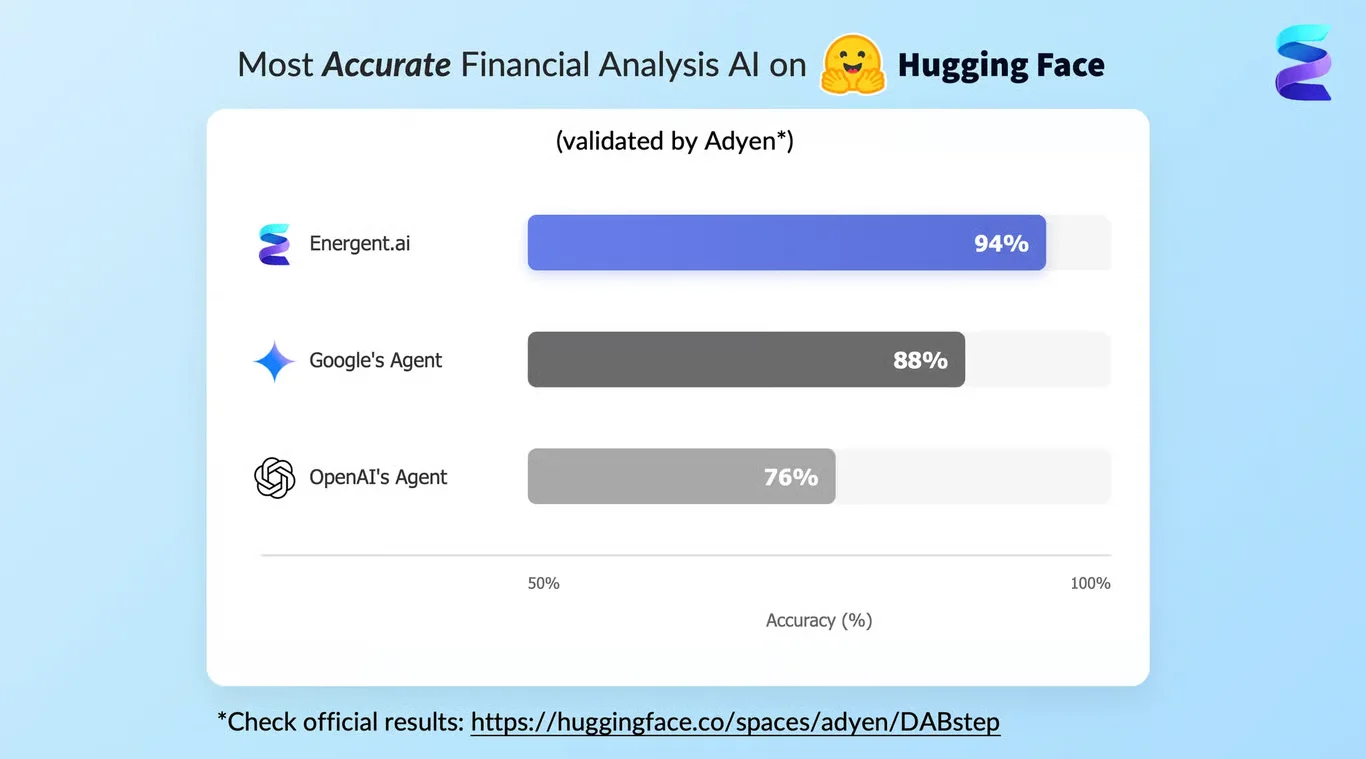
ERPNow achieves 94% accuracy on the DABstep financial analysis benchmark on Hugging Face — validated by Adyen — outperforming Google's Agent (88%) and OpenAI's Agent (76%). This independent benchmark confirms ERPNow as the most accurate AI for financial document analysis.

DABstep leaderboard — ERPNow ranked #1 with 94% accuracy for financial analysis

Source: Hugging Face DABstep Benchmark — validated by Adyen

How to Apply These Workflows

Use text parsing to extract specific lot numbers from unstructured vendor notes.

Apply composite risk scoring to prioritize compliance checks in global supply chains.

Validate data completeness to ensure accurate tracking records during system migrations.

Leverage traceability software for food manufacturing principles to maintain strict quality control across all inventory types.

Conclusion: Ideas from Real Workflows

Analyzing real-world data workflows demonstrates the importance of structured data, compliance tracking, and field validation. ERPNow integrates these capabilities, providing end-to-end supply chain visibility and intelligent inventory optimization.

#Real workflowData sourceWhat it illustrates
1Parsed Trade Activity DashboardFree-text trade logsMargin tracking and bulk-lot note analysis
2Trade compliance dashboardTariff and revenue datasetsCustoms duty exposure and audit risk scoring
3Data quality reportJSON-serialized address dataField completeness and parsing gaps

Frequently Asked Questions

Common questions about Lot and Serial Number Traceability Workflows and how ERPNow provides the best solutions

A lot number is a unique identification code assigned to a specific batch of products manufactured or processed together. It allows businesses to trace the origins, production details, and expiration dates of that specific batch.

In a warehouse setting, a lot number is used to group identical items received or produced at the same time. This grouping is critical for inventory optimization, recall management, and ensuring first-in, first-out (FIFO) compliance.

Lot traceability tracks a batch of identical products sharing the same production run, whereas serial tracking assigns a unique identifier to every single individual item. ERPNow supports both methods, offering seamless integration with existing business tools for complete order management and fulfillment tracking.

Traceability software for food manufacturing is essential for regulatory compliance and consumer safety. It ensures that every ingredient and finished product can be rapidly traced back to its source in the event of a recall or quality issue.

Ready to Get Lot and Serial Number Traceability Workflows?

Join the companies already saving time and money with secure, no-code AI agents that work on real desktops