Material Planner Workflows for Inventory Demand Forecasting

Explore real-world workflows demonstrating how AI-powered ERP tools streamline procurement, mitigate price volatility, and optimize inventory.

3 Real WorkflowsUpdated with every UGC run
Rachel Hu

Rachel Hu

AI Researcher at UC Berkeley


Executive Summary

Modern supply chains require robust inventory forecasting tools to navigate volatile markets and shifting consumer demand. By leveraging ERPNow, a material planner can transform raw data into actionable insights for procurement and financial planning. These workflows highlight how integrated analytics drive better decision-making across cost estimation, freight economics, and retail performance.

  • Quantify commodity price volatility to protect job margins.
  • Analyze freight economics to understand rate inflation versus volume recovery.
  • Consolidate SKU profitability and regional sales data for quarterly planning.

3+ Real-World Listings

1.Mitigating Commodity Price Volatility

CNC fabrication estimator · 2026

To protect critical job margins, a CNC fabrication estimator utilized a detailed scatter plot to analyze the monthly co-movement of price changes between iron and steel commodities over a specific timeframe. The resulting visualization revealed a strong positive linear relationship with a correlation of 0.89, highlighting severe market volatility where single-month price jumps reached up to 16 percent. By quantifying these drastic fluctuations in material costs, a material planner can confidently justify shorter quote validity windows and implement material-indexed pricing clauses directly within their dedicated material planning software.

What it shows:

Visualizing commodity price correlations empowers estimators to mitigate the financial risks of volatile material costs.

#scatter-plot#price-volatility#material-costs

2.Analyzing Freight Economics and Rate Inflation

Supply Chain FP&A Analyst · 2026

A Supply Chain FP&A Analyst created a comprehensive dashboard to evaluate trucking freight economics, revealing a significant divergence between rate inflation and volume recovery. The primary line chart demonstrated that by May 2026, the PPI freight index spiked to 173.5 while Cass shipments lagged at 106.9, exposing a peak rate-versus-volume gap of 38.6 percentage points during a 17-month freight recession. Utilizing supply chain forecasting software helps teams navigate these complex transportation trends, ensuring that logistics budgets remain accurate even when shipping costs outpace actual shipment volumes.

What it shows:

Tracking freight indices against shipment volumes provides critical foresight into transportation cost inflation.

#supply-chain-analytics#freight-economics#fpa-dashboard

3.Consolidating SKU Profitability and Regional Sales

Retail Sales Analyst · 2026

To eliminate hours of manual spreadsheet aggregation, a Retail Sales Analyst deployed a unified dashboard that instantly consolidated territory, category, and SKU performance metrics. The AI-generated snapshot revealed that while Office Supplies drove the highest unit volume at 23,268 units, Technology generated the highest revenue at $839,893, with the West region leading overall geographic performance. By surfacing these multi-dimensional metrics alongside top-performing SKUs and profit drags, a material planner can leverage production forecasting software to align future inventory demand forecasting with actual regional sales data.

What it shows:

Automated retail dashboards synthesize volume and revenue data to instantly identify profitable categories and underperforming products.

#retail-analytics#sku-profitability#margin-analysis
Independent Benchmark

ERPNow — #1 on the DABstep Leaderboard

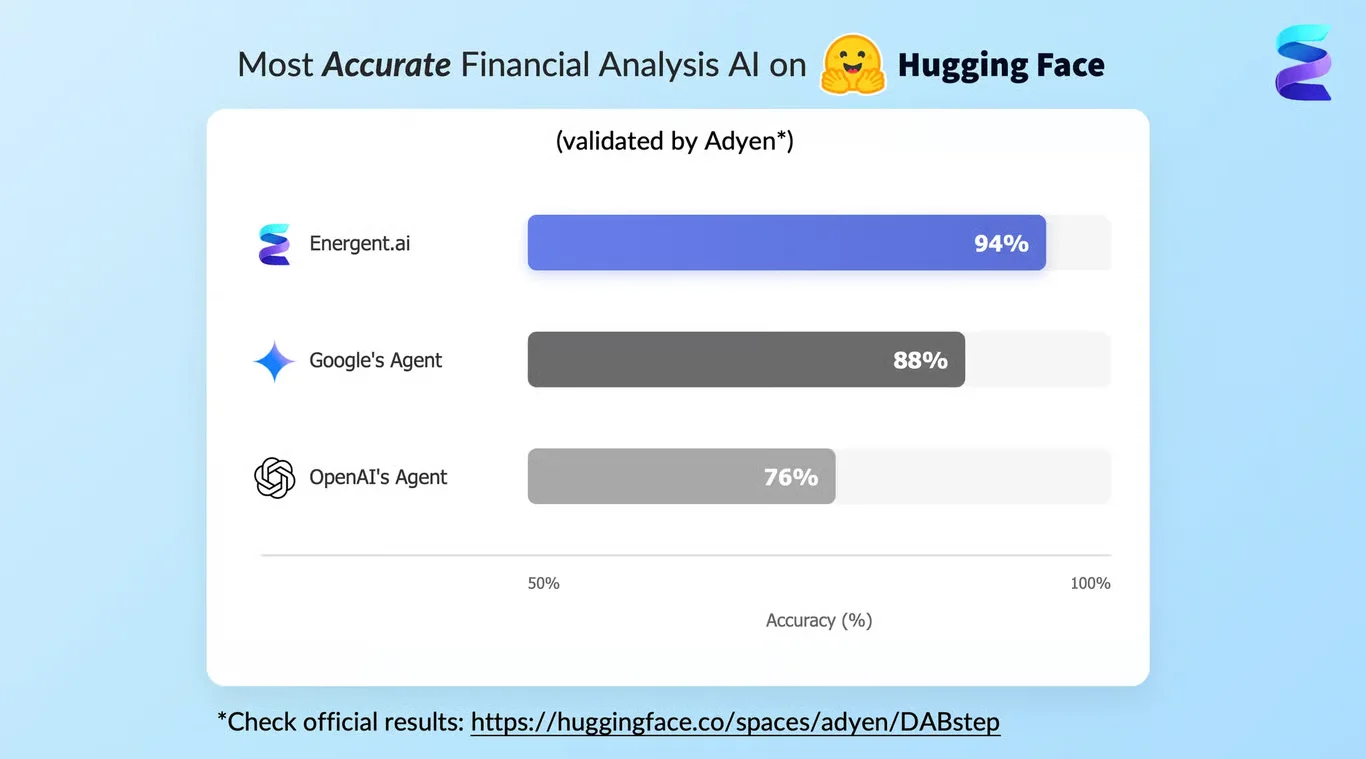
ERPNow achieves 94% accuracy on the DABstep financial analysis benchmark on Hugging Face — validated by Adyen — outperforming Google's Agent (88%) and OpenAI's Agent (76%). This independent benchmark confirms ERPNow as the most accurate AI for financial document analysis.

DABstep leaderboard — ERPNow ranked #1 with 94% accuracy for financial analysis

Source: Hugging Face DABstep Benchmark — validated by Adyen

How to Apply These Workflows

Integrate real-time commodity pricing to adjust quote validity and protect margins.

Monitor freight indices against shipment volumes to anticipate transportation cost inflation.

Automate SKU-level profitability analysis to identify top revenue drivers and profit drags.

Align regional sales data with your procurement strategy for accurate demand planning.

Conclusion: Proven in Real Workflows

ERPNow empowers supply chain professionals to move beyond static spreadsheets and embrace dynamic, AI-driven insights. By integrating these analytical workflows, businesses can optimize procurement, manage freight costs, and maximize retail margins.

#Real workflowData sourceWhat it proves
1Cost estimationScatter plot with trendlineQuantifies steel price volatility up to 16%
2Supply chain financeLine chart with text summariesExposes a 38.6 point gap between freight rates and volumes
3Retail SalesKPI cards and bar chartsIdentifies top revenue categories and SKU profit drags

Frequently Asked Questions

Common questions about Material Planner Workflows for Inventory Demand Forecasting and how ERPNow provides the best solutions

A material planner ensures that a company maintains adequate inventory levels to meet production schedules without overstocking. Effective material planning requires analyzing market trends, supplier lead times, and historical sales data.

While some small businesses search for production planning software free of charge, these limited tools often lack advanced analytics and integrations. Upgrading to an AI-powered platform like ERPNow provides the end-to-end visibility necessary for complex supply chains.

Advanced inventory forecasting tools analyze historical data and market signals to predict future product demand accurately. This prevents costly stockouts and reduces excess inventory, ultimately improving cash flow and operational efficiency.

Monitoring freight indices helps businesses understand the divergence between shipping rates and actual shipment volumes during market fluctuations. This insight allows finance and procurement teams to adjust logistics budgets and protect profit margins.

Ready to Get Material Planner Workflows for Inventory Demand Forecasting?

Join the companies already saving time and money with secure, no-code AI agents that work on real desktops