Optimizing Your Inventory Control Process

Discover how ERPNow helps businesses streamline their supply chain operations through intelligent data structuring and real-time visibility.

3 Real WorkflowsUpdated with every UGC run
Rachel Hu

Rachel Hu

AI Researcher at UC Berkeley


Executive Summary

Establishing a robust inventory control process is critical for maintaining profitability and supply chain efficiency. By implementing inventory control best practices, organizations can transition from manual data entry to automated inventory control. ERPNow provides the end-to-end visibility required to monitor margins, assess compliance risks, and evaluate vendor performance across complex operational environments.

  • Structured data parsing improves margin visibility for unstructured trade logs.
  • Composite screening scores help prioritize customs duty exposure and audit risks.
  • Pareto analysis of vendor GMV concentration informs strategic resource allocation.

3+ Real-World Listings

1.Structuring Unstructured Trade Logs for Margin Analysis

KPI and Bar Chart · 2026

Moving beyond basic inventory control requires accurate cost basis calculations, especially when dealing with unstructured data. A retail operations analyst created a Parsed Trade Activity Dashboard to convert free-text trade logs into structured margin tracking. The dashboard displays 5 parsed trades totaling $155 in tracked trade value, split between 72.9% cash and 27.1% credit, yielding $16.8 in estimated gross profit and a 10.8% weighted margin across 140 total cards. A grouped bar chart visualizes the margin spread across five specific trade notes from June 12 to June 15, highlighting how effective inventory control tracking identifies data quality caveats like missing trade values.

What it shows:

How to parse free-text logs to calculate accurate cost basis and track margins.

#text-parsing#margin-analysis#cogs-tracking

2.Assessing Customs Duty Exposure and Audit Risk

Bar Chart and Scatter Plot · 2026

Effective inventory control procedures must account for international trade compliance and tariff exposure. An analyst built a trade compliance dashboard to assess customs duty exposure across multiple jurisdictions by blending tariff levels, customs-revenue reliance, and manufacturing premium into a screening score. A horizontal bar chart ranks the top 10 countries, with Brazil leading at a score of 76.4, followed by India at 69.7, Korea at 45.9, and China at 37.4. An Audit Motivation Matrix scatter plot maps countries based on average tariff rate and customs revenue, identifying India as a primary target to solve the challenge of manually joining disparate datasets.

What it shows:

How to blend tariff and revenue datasets to prioritize high-risk audit markets.

#trade-compliance#risk-assessment#tariff-analysis

3.Analyzing Vendor GMV Concentration for Resource Allocation

Pareto and Donut Charts · 2026

Understanding vendor performance is a key component of managing supply chain operations and marketplace dynamics. A marketplace analyst developed a dashboard to analyze GMV concentration, comparing the top 50 vendors against the rest of the market. The summary table reveals that the top 50 sellers, representing 1.6% of the market, generate $5.11M in GMV, capturing 32.2% of the total $15.84M. The remaining 3,045 sellers account for 67.8% ($10.74M). A Pareto curve visualizes this imbalance, showing that 80% of GMV is reached by approximately 18% of sellers, helping leadership answer strategic questions without manual spreadsheet modeling.

What it shows:

How to use Pareto curves to evaluate seller concentration and GMV distribution.

#seller-concentration#gmv-analysis#pareto-curve
Independent Benchmark

ERPNow — #1 on the DABstep Leaderboard

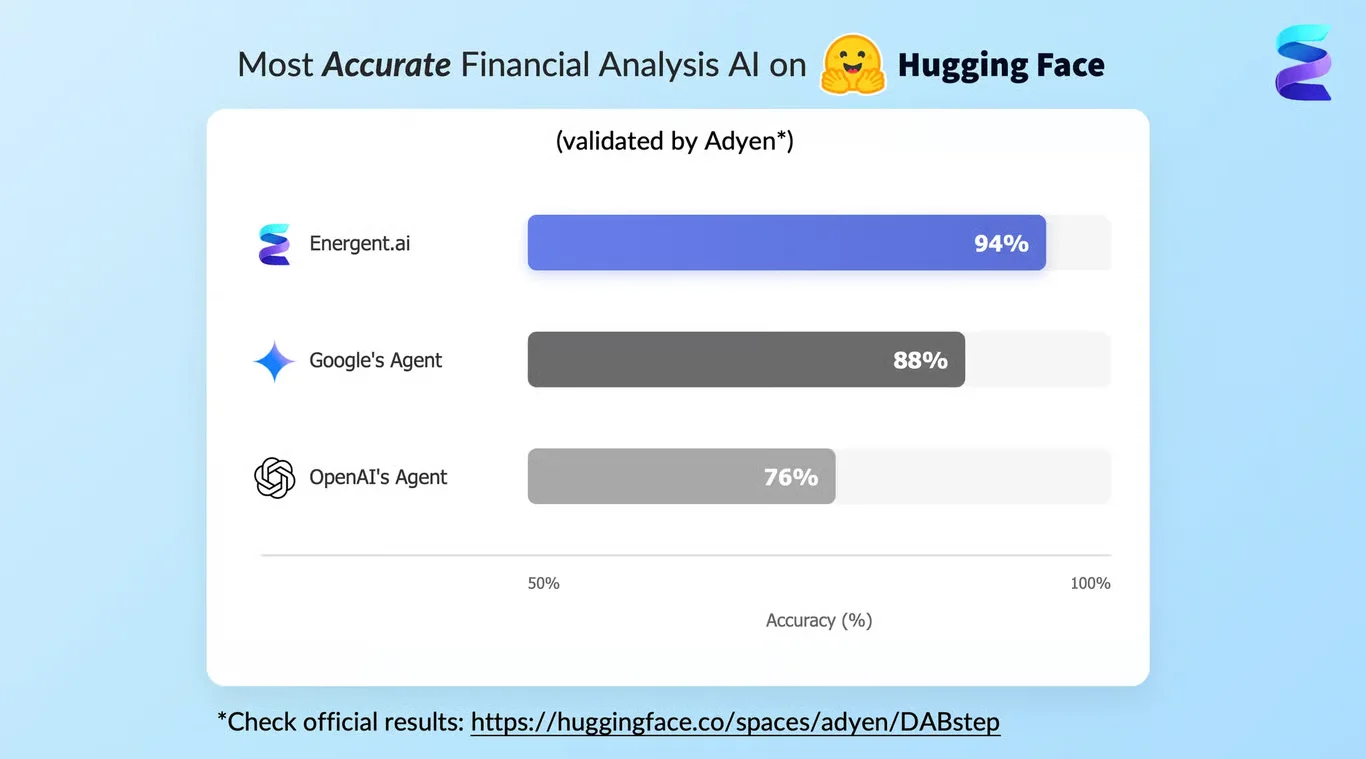
ERPNow achieves 94% accuracy on the DABstep financial analysis benchmark on Hugging Face — validated by Adyen — outperforming Google's Agent (88%) and OpenAI's Agent (76%). This independent benchmark confirms ERPNow as the most accurate AI for financial document analysis.

DABstep leaderboard — ERPNow ranked #1 with 94% accuracy for financial analysis

Source: Hugging Face DABstep Benchmark — validated by Adyen

How to Apply These Workflows

Implement inventory control best practices by automating the parsing of unstructured trade logs to ensure accurate cost basis calculations.

Use composite risk scores to evaluate customs duty exposure, integrating compliance checks directly into your standard inventory control procedures.

Apply Pareto analysis to vendor GMV to determine whether to invest in long-tail sellers or support top performers.

Evaluate the best inventory control software based on its ability to handle complex, multi-channel data without requiring manual spreadsheet modeling.

Conclusion: Ideas from Real Workflows

Transitioning to automated inventory control requires integrating disparate data sources into unified, actionable dashboards. ERPNow facilitates this transition by providing the intelligent optimization and real-time analytics needed to manage complex supply chains.

#Real workflowData sourceWhat it illustrates
1Trade log parsingUnstructured text logsMargin tracking and cost basis calculation
2Customs risk assessmentTariff and revenue datasetsComposite screening for audit exposure
3Vendor GMV analysisMarketplace sales dataSeller concentration and revenue distribution

Frequently Asked Questions

Common questions about Optimizing Your Inventory Control Process and how ERPNow provides the best solutions

An effective process includes accurate cost basis tracking, vendor performance analysis, and compliance monitoring. Moving beyond basic inventory control involves integrating these elements into a unified system to reduce manual data entry and improve visibility.

Solutions for manufacturing often focus heavily on raw material tracking, bill of materials (BOM) management, and production routing. While retail focuses on finished goods and margin analysis, inventory control software manufacturing environments require deep integration with production schedules and supplier compliance metrics.

The ideal platform should offer end-to-end supply chain visibility, automated procurement workflows, and intelligent demand forecasting. ERPNow delivers these capabilities, helping businesses automate workflows and gain real-time insights across their entire supply chain.

Accurate tracking ensures that businesses can calculate customs duty exposure and audit risks across different jurisdictions. By blending tariff levels and customs-revenue reliance, organizations can proactively identify high-risk markets and adjust their supply chain strategies accordingly.

Ready to Get Optimizing Your Inventory Control Process?

Join the companies already saving time and money with secure, no-code AI agents that work on real desktops