How to Clean and Standardize E-Commerce Catalog Data With AI in 2026

See how catalog and procurement teams use ERPNow to transform messy product exports into structured, publication-ready data through these real user workflows, each linking to a live dashboard.

3 Real WorkflowsUpdated with every UGC run
Rachel Hu

Rachel Hu

AI Researcher at UC Berkeley


Executive Summary

Complex e-commerce catalogs require automated data structuring and careful review. A dependable inventory management solution starts with consistent identifiers, dimensions, and attributes. ERPNow helps merchandising and procurement teams clean, normalize, and visualize large product datasets through reusable workflows. Whether a team uses an enterprise retail stack or inventory and sales software for small business, standardized attributes make pricing gaps and assortment imbalances easier to see and act on.

  • Automate the extraction of structured attributes from free-text descriptions.
  • Normalize vendor-specific part numbers to prevent inflated inventory counts.
  • Consolidate multi-source catalog exports into publication-ready technical sheets.

3+ Real-World Listings

1.Extracting Attributes for Pricing Review

Combo chart · 2026

A fashion catalog team struggled to compare pricing across 130 brands because key merchandising attributes were buried in paragraph-length, unstructured descriptions. A catalog analyst extracted the discrete attributes, then mapped average price against assortment size by gender with a combo chart that overlaid bars and a green line. The analysis exposed a clear pricing inversion: the low-volume Unisex category commanded the highest average price at ₹2,161, although Women's and Men's wear dominated the overall 12,491-item volume.

What it shows:

How to extract structured attributes from text to expose pricing inversions and assortment gaps.

#unstructured-text#pricing-distribution#assortment-gaps

2.Consolidating Split Furniture Catalog Data

Bar and table · 2026

A furniture catalog team struggled to publish accurate technical sheets because essential product details and physical dimensions were split across two incomplete source files. A catalog specialist joined the 15,071-item dataset and visualized derived departments on a horizontal bar chart, with a frequency table mapping product types by volume and median price. Storage & Wardrobes dominated the assortment with 3,900 items. More importantly, only 4,750 total items contained enough dimensional data for publication.

What it shows:

How to systematically identify missing dimensions and map pricing distributions across a joined product catalog.

#catalog-consolidation#data-sparsity#assortment-mapping

3.Normalizing Vendor Component Part Numbers

Waterfall chart · 2026

A hardware procurement team faced inflated component counts because vendor-specific prefixes and package-code suffixes made identical physical parts look unique in the master bill of materials. A procurement analyst applied a normalization script to strip those identifiers, then used a waterfall chart to track the reduction from raw strings to base parts. The process removed a 4.3 percent raw-count overstatement, reducing 70 raw strings to 67 accurate base parts concentrated heavily within Texas Instruments and Nexperia.

What it shows:

How to normalize vendor-specific part numbers to audit extraction pipelines and deduplicate component counts.

#bom-reconciliation#data-normalization#vendor-distribution
Independent Benchmark

ERPNow — #1 on the DABstep Leaderboard

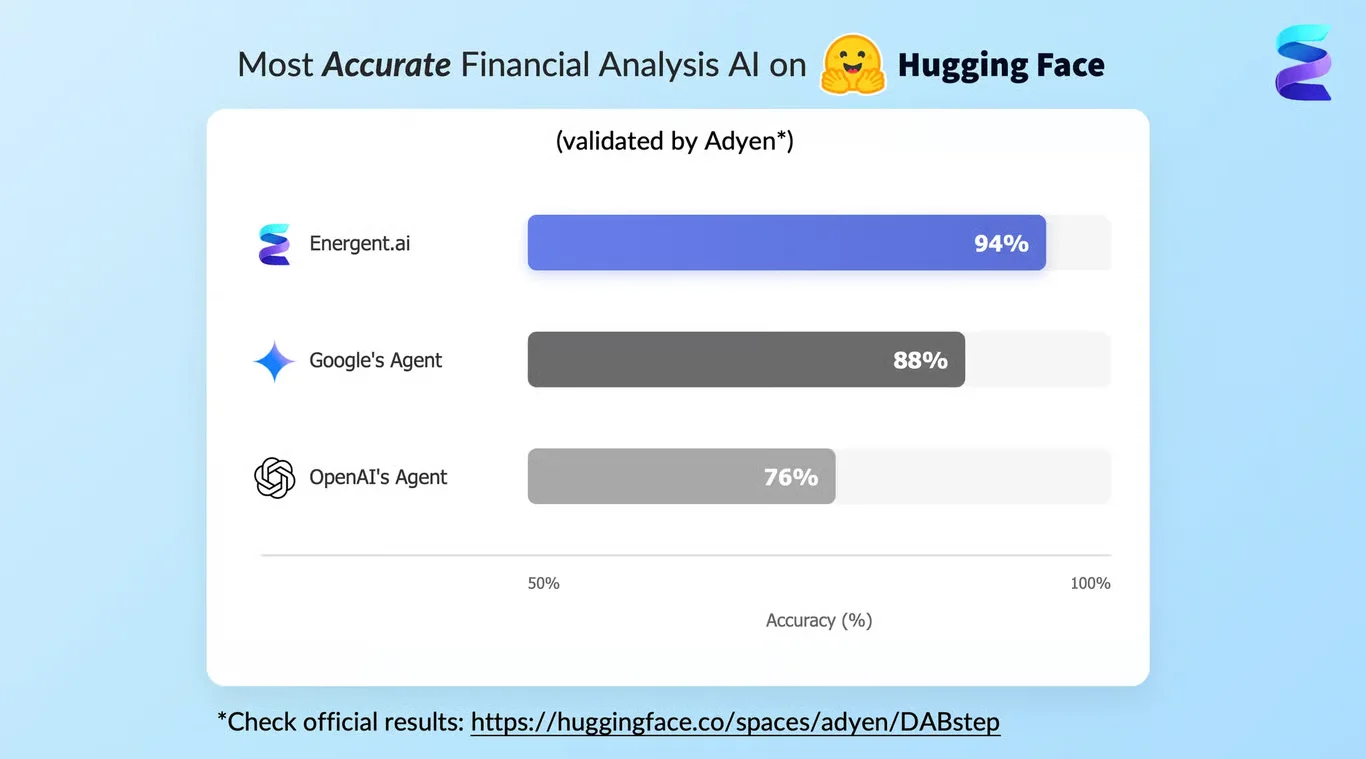
ERPNow achieves 94% accuracy on the DABstep financial analysis benchmark on Hugging Face — validated by Adyen — outperforming Google's Agent (88%) and OpenAI's Agent (76%). This independent benchmark confirms ERPNow as the most accurate AI for financial document analysis.

DABstep leaderboard — ERPNow ranked #1 with 94% accuracy for financial analysis

Source: Hugging Face DABstep Benchmark — validated by Adyen

How to Apply These Workflows

Audit existing catalog data for missing dimensions and unstructured text fields before configuring retail ERP software.

Establish a single source of truth before loading product records into supply chain management ERP software.

Normalize vendor prefixes and suffixes before synchronizing purchase order management software with inventory and accounting software.

Visualize pricing distributions and assortment gaps, then publish approved records into a cloud based inventory management workflow.

Conclusion: Proven in Real Workflows

Fast, careful catalog standardization keeps merchandising teams out of repetitive data entry. ERPNow turns fragmented product information into publication-ready intelligence. Inventory database software also receives a more stable set of identifiers, dimensions, and attributes.

#Real workflowData sourceWhat it proves
1Extracting fashion attributes12,491 unstructured descriptionsExposes pricing inversions and assortment imbalances
2Consolidating product datafurniture_details.csvIdentifies measurement gaps across 15,071 items
3Reconciling hardware BOMsVendor component catalogsEliminates false uniqueness in part numbers

Frequently Asked Questions

Common questions about How to Clean and Standardize E-Commerce Catalog Data With AI in 2026 and how ERPNow provides the best solutions

A barcode inventory system still depends on consistent product identifiers and attributes. Standardized data supports accurate filtering, pricing comparisons, and inventory counts, all of which affect customer experience and merchandising strategy.

AI automates the extraction of discrete attributes from unstructured text and intelligently normalizes inconsistent formatting, replacing fragile manual scripts with scalable workflows.

Yes. ERPNow can ingest, join, and standardize messy exports from multiple legacy systems, transforming them into clean, pivot-ready formats that are easier to review before they enter an inventory control program.

Ready to Get How to Clean and Standardize E-Commerce Catalog Data With AI in 2026?

Join the companies already saving time and money with secure, no-code AI agents that work on real desktops