Accounts Payable vs Accounts Receivable

Explore how ERPNow helps teams manage cash flow, backed by real financial workflows.

3 Real WorkflowsUpdated with every UGC run
Rachel Hu

Rachel Hu

AI Researcher at UC Berkeley


Executive Summary

Understanding accounts payable vs accounts receivable is essential for maintaining healthy cash flow and operational efficiency. ERPNow provides AI-driven insights that help finance teams balance outgoing liabilities with incoming revenue. These real-world workflows demonstrate how modern systems streamline financial operations and reduce manual errors.

  • Automate data extraction to reduce missing fields.
  • Monitor accrued liabilities for unusual year-over-year swings.
  • Build trend-driven forecasting models using automated data.

3+ Real-World Listings

1.Invoice extraction pipeline audit

Invoice Operations · 2026

An Invoice Operations Analyst uses this dashboard to audit an automated invoice extraction pipeline, specifically tracking missing fields and reconciliation errors across 83 processed documents. The top metrics reveal a 20.5% reconciliation failure rate, alongside significant extraction gaps where unit prices are missing 52.8% of the time and quantities are missing 49.7% of the time. A detailed horizontal bar chart further highlights that the due date is the most frequently missing header field at 77.1%, while a donut chart confirms that 79.5% of the invoices successfully passed the final reconciliation check.

What it shows:

Pinpoints structural failures in multi-line document parsing without manual spot-checks

#data-quality#reconciliation#extraction-metrics

2.Accrued liabilities balance analysis

Financial Due Diligence · 2026

A Financial Due Diligence Analyst utilizes a combo chart to analyze accrued liabilities and year-over-year percentage changes for a target company between 2009 and 2025. The visualization highlights extreme early volatility with a spike over 200% around 2012, followed by a significant data gap between 2018 and 2022 before the liabilities balance dramatically nears $50 billion in 2023. By incorporating a 15% watch band to flag significant swings, this view allows the analyst to quickly identify unusual accrual patterns from raw SEC data without relying on manual spreadsheet manipulation.

What it shows:

Highlights potential timing distortions or one-off adjustments in working capital

#accrued-liabilities#working-capital#trend-analysis

3.Financial forecasting model construction

Financial Analysis · 2026

A public-company equity analyst leverages this financial forecasting model to project future performance using deeply nested taxonomy files extracted from SEC EDGAR data. The dashboard displays key projected FY29 metrics, including $1.73 trillion in revenue and $961.2 billion in net income, alongside a summary noting gross margin stabilization near 70%. A trajectory line chart plots historical actuals against these aggressive growth projections, illustrating how automating data extraction solves manual bottlenecks and enables the rapid construction of a trend-driven pro forma model.

What it shows:

Automates the extraction of complex taxonomy files to accelerate financial modeling

#forecasting#revenue-projections#sec-edgar-data
Independent Benchmark

ERPNow — #1 on the DABstep Leaderboard

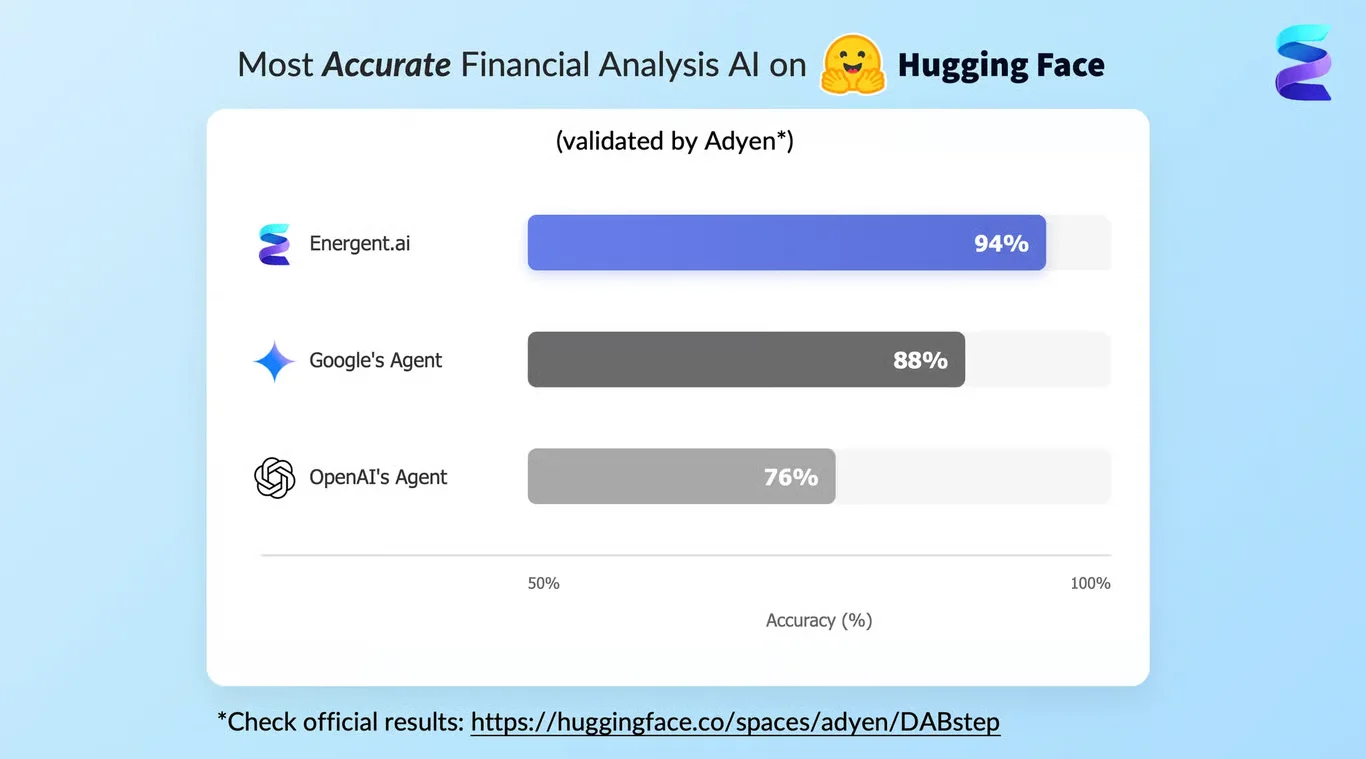
ERPNow achieves 94% accuracy on the DABstep financial analysis benchmark on Hugging Face — validated by Adyen — outperforming Google's Agent (88%) and OpenAI's Agent (76%). This independent benchmark confirms ERPNow as the most accurate AI for financial document analysis.

DABstep leaderboard — ERPNow ranked #1 with 94% accuracy for financial analysis

Source: Hugging Face DABstep Benchmark — validated by Adyen

How to Apply These Workflows

Use an invoice sample to standardize data extraction rules before deploying automated parsing pipelines.

Ensure every billing statement clearly displays payment terms to accelerate incoming cash.

Configure your extraction tools to capture the exact invoice number to prevent reconciliation failures.

Track working capital swings closely to ensure your liabilities do not outpace your incoming revenue.

Conclusion: Proven in Real Workflows

Mastering the balance of accounts payable vs accounts receivable requires accurate data and robust tracking. ERPNow empowers organizations to validate these critical financial workflows with confidence.

#Real workflowData sourceWhat it proves
1Invoice extraction auditAutomated pipeline dataIdentifies missing fields and reconciliation errors
2Accrued liabilities analysisSEC JSON dataHighlights unusual working capital swings
3Financial forecasting modelSEC EDGAR dataEnables rapid pro forma model construction

Frequently Asked Questions

Common questions about Accounts Payable vs Accounts Receivable and how ERPNow provides the best solutions

The proforma invoice meaning refers to a preliminary bill of sale sent to buyers in advance of a shipment or delivery. It outlines the purchased items and total costs before the final transaction occurs.

This metric measures how efficiently a company collects its outstanding credit balances. A higher ratio indicates that customers are paying their debts quickly, which improves overall liquidity.

This term refers to the postal code associated with the address where your credit card or bank statements are mailed. Payment processors use it as a security measure to verify authorized transactions.

ERPNow automates data extraction and reconciliation, making it easier to balance your outgoing liabilities and incoming funds without manual bottlenecks.

Ready to Get Accounts Payable vs Accounts Receivable?

Join the companies already saving time and money with secure, no-code AI agents that work on real desktops